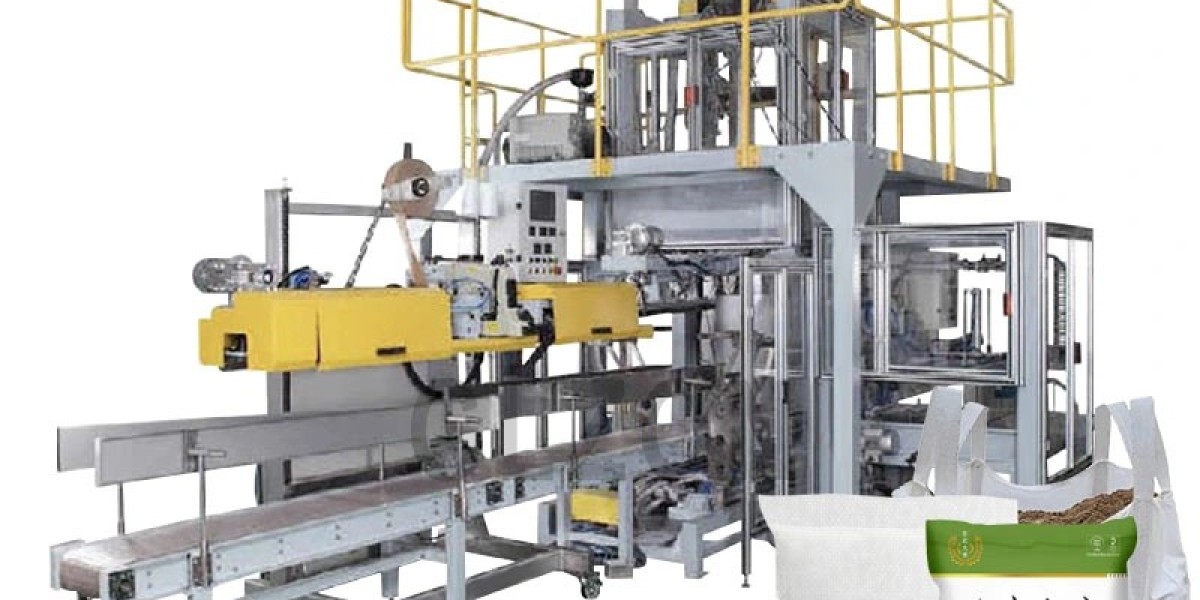

Cement and mineral packaging operations run at a scale most other industries never encounter. Plants routinely move thousands of bags per hour across multiple packaging lines, often around the clock. At this throughput level, small inefficiencies compound rapidly, and equipment decisions that seem minor on paper can have outsized effects on daily output.
This article covers the specific engineering considerations that matter most when specifying bagging equipment for cement and mineral operations, where volume, dust, and continuous duty cycles create demands that differ meaningfully from lower-throughput industries.
What Makes Cement and Mineral Packaging Different
Extreme Throughput Requirements
Cement plants often need to package material at rates exceeding what many other industries would consider peak capacity, sustained continuously across full shifts rather than in short bursts. Equipment specified for moderate-volume industries frequently cannot withstand this duty cycle without premature wear.
Product Abrasiveness
Cement, lime, and many mineral powders are highly abrasive. This affects nearly every component that contacts the product, from filling spouts to conveyor surfaces, requiring wear-resistant materials and more frequent component replacement schedules than less abrasive products demand.
Dust Generation at Scale
Because cement and mineral bagging operates at such high volume, even well-controlled dust generation per bag becomes a significant cumulative issue across a full production run. Containment engineering matters more here than in almost any other packaging application.
Valve Bag Dominance
Unlike many other industries, cement and mineral packaging relies heavily on valve bags, which self-seal through product compaction rather than requiring separate closure equipment. This shapes nearly every aspect of line design, from filling method to discharge handling.
Key Engineering Considerations for High-Throughput Bagging Equipment
Fill Head Configuration and Multi-Spout Systems
Given the throughput demands, many cement and mineral operations rely on multi-spout rotary filling systems rather than single-spout equipment. Multiple filling heads operating simultaneously allow the system to hit required output rates without pushing any single fill mechanism beyond reliable operating speed.
Wear-Resistant Material Selection
Components in direct product contact, including spouts, chutes, and impeller mechanisms, need wear-resistant coatings or hardened materials to withstand continuous exposure to abrasive powders without frequent replacement.
Weighing Accuracy at Speed
Maintaining accurate fill weights becomes more challenging as fill speed increases. High-throughput systems require precise, fast-responding weighing mechanisms calibrated specifically for the flow characteristics of the product being packaged, since generic weighing setups often struggle to maintain accuracy at cement-industry fill rates.
Valve Bag Sealing Reliability
Because valve bags rely on product compaction for sealing rather than mechanical closure, fill consistency directly affects seal reliability. Underfilled valve bags risk poor sealing and product loss during handling, making precise fill control especially important in this format.
Facilities specifying equipment for these demands often compare available configurations of automatic bagging equipment rated specifically for high-throughput, abrasive-product applications, since standard equipment built for lighter-duty industries frequently cannot sustain cement-level production volumes without excessive downtime.
Dust Containment at Cement-Industry Scale
Given the throughput involved, dust extraction systems in cement and mineral bagging need significantly higher capacity than equivalent systems in lower-volume industries. Under-sized extraction leads to visible dust accumulation throughout the packaging area, creating both product loss and worker exposure concerns.
Sealed transfer points between silo discharge, weighing, and filling stages become increasingly important at high volume, since even minor leakage at each transfer point compounds significantly across continuous, high-speed operation.
Conveyor and Discharge Design for High-Volume Lines
Handling Bag Volume Without Bottlenecks
At cement-industry throughput, discharge conveyors need sufficient capacity and speed to move filled bags away from the filling station without creating backups that slow the entire line.
Bag Integrity During High-Speed Transfer
Valve bags filled with dense mineral products can be prone to seam stress during rapid conveyor transfers. Conveyor design needs to account for smooth transitions and appropriate speed control to avoid bag damage before bags even reach palletizing.
Why Palletizing Speed Must Match Bagging Throughput
High-throughput bagging lines create a real risk of overwhelming downstream palletizing if the two systems are not properly matched in capacity. A bagging line producing well beyond what a palletizing system can handle simply shifts the bottleneck further down the line rather than solving the underlying throughput challenge.
Cement and mineral operations typically require robotic palletizing systems built specifically for continuous, high-cycle operation, with the payload capacity and cycle time to keep pace with multi-spout filling lines. A properly matched robotic palletizer built for heavy, dense bag formats common in cement and mineral packaging helps maintain consistent throughput across the full line rather than creating a new constraint at the stacking stage.
Maintenance Demands Specific to This Sector
Higher Wear Component Replacement Frequency
Given continuous operation and abrasive product exposure, wear components in cement and mineral bagging lines typically require more frequent inspection and replacement than equivalent components in lighter-duty industries.
Extraction System Filter Maintenance
Dust extraction systems operating at the volume required for cement production need more frequent filter maintenance to sustain containment performance, since filter loading happens faster under high dust volume conditions.
Planning Around Continuous Operation
Many cement and mineral plants run packaging lines close to continuously, which limits maintenance windows. Facilities need to plan preventive maintenance schedules carefully around available downtime rather than assuming flexible scheduling as in lower-utilization operations.
Common Mistakes in High-Throughput Bagging Line Design
Specifying equipment rated for moderate volume industries without accounting for cement-level continuous duty cycles.
Underestimating dust extraction capacity requirements relative to actual production volume.
Failing to match palletizing throughput capacity to high-speed bagging output, creating a new bottleneck downstream.
Overlooking wear component replacement costs when calculating total cost of ownership.
Underinvesting in weighing system precision needed to maintain accuracy at high fill speeds.
Best Practices for Cement and Mineral Packaging Line Design
Facilities planning high-throughput bagging investments should request equipment performance data specifically validated at cement or mineral-industry volumes, rather than relying on general throughput specifications that may not reflect sustained, continuous operation.
They should evaluate total line capacity holistically, ensuring bagging, conveying, and palletizing stages are matched in throughput rather than optimizing any single stage in isolation.
Building maintenance schedules around realistic operational windows, rather than assuming ideal downtime availability, helps ensure preventive maintenance actually gets performed consistently.
Future Trends in High-Volume Bagging and Palletizing
Increased use of predictive maintenance sensors on wear-prone components is helping cement and mineral producers reduce unplanned downtime by identifying component degradation before failure occurs.
Advances in multi-spout filling technology continue to push achievable throughput higher while improving fill weight accuracy, narrowing the gap between raw speed and precision that has historically challenged high-volume operations.
Growing adoption of robotic palletizing specifically engineered for heavy, dense bag formats is helping more cement and mineral producers eliminate palletizing as a throughput constraint, a bottleneck that was common in earlier generations of high-volume packaging lines.
Key Takeaways
Cement and mineral packaging operates at throughput levels that demand different engineering than most other industries
Product abrasiveness requires wear-resistant materials throughout the bagging and conveying system
Dust containment capacity must scale with production volume, not just product characteristics
Palletizing capacity must match high-speed bagging output to avoid shifting the bottleneck downstream
Maintenance planning needs to account for continuous operation and limited downtime windows
Frequently Asked Questions
Why do cement plants typically use valve bags instead of open-mouth bags? Valve bags self-seal through product compaction, which suits the high-speed, continuous nature of cement packaging better than formats requiring separate sealing steps.
How much more dust extraction capacity does a cement bagging line need compared to lower-volume industries? This varies by specific equipment and product, but extraction systems generally need significantly higher capacity to keep pace with the sheer volume of product moving through the line continuously.
Can standard industrial bagging equipment be used for cement packaging? Generally not effectively. Standard equipment built for moderate-volume, less abrasive products often wears out quickly or cannot sustain the throughput cement production requires.
Is robotic palletizing necessary for cement plants, or can manual palletizing keep up? At typical cement production volumes, manual palletizing usually cannot sustain the required throughput without becoming a significant bottleneck, making robotic palletizing a practical necessity rather than an optional upgrade for most mid-to-large operations.
How often do wear components need replacement in high-throughput cement bagging lines? This depends on specific equipment and material abrasiveness, but replacement frequency is typically higher than in lower-volume, less abrasive industries, making this an important factor in total cost of ownership calculations.
Conclusion
Cement and mineral packaging operations demand a different engineering approach than most other industrial bagging applications. Extreme throughput, product abrasiveness, and dust generation at scale all require equipment specifically built for continuous, high-volume duty cycles rather than adapted from lower-throughput industries.
Plant managers specifying equipment for these operations need to evaluate the entire line holistically, from fill head configuration through palletizing capacity, ensuring every stage can sustain the volume the operation demands. Facilities that get this engineering right consistently achieve more reliable throughput, lower long-term maintenance costs, and fewer unplanned production disruptions than those that treat cement-scale packaging as simply a larger version of standard industrial bagging.