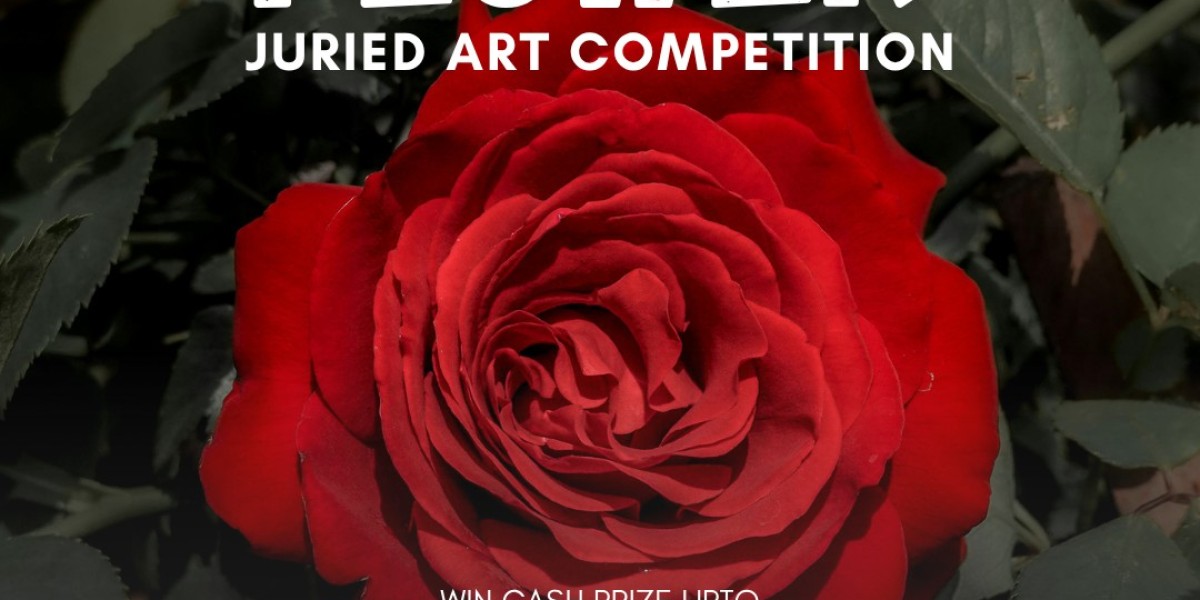

In today's art world, flowers are often regarded as a secure, classic, or even instantly decorative theme. Flower art Paintings are used in greeting cards, in the lobby of hotels, and are displayed in local cafes. To limit botanical art to mere prettiness is to misrepresent one of the strongest, most subversive, most intellectually complex motifs in the history of art.
For centuries, rendering a flower has never been just about the flower. It has served as a means of discussion about death, wealth, bodies, and gender/sex roles, etc. Flower Art Competition by TERAVARNA is here to represent exactly that: the different versions that the flower represents.
By participating in this flower art contest, the artist chooses to join a long and important conversation that has been carried on for thousands of years through the intentional observation of the natural world in painting, sculpture, or photography.
The Dutch Golden Age: Luxury, Madness, and Mortality by John A. G. Roberts
A deeper understanding of the floral art paintings can be gained by taking a look at the 17th century in Holland. Still life paintings with hyper-realistic bouquets were an absolute phenomenon in the Dutch Golden Age. Apparently, the works praised the quality of nature's beauty and the technical virtuosity of the painter. Beneath its surface layers, it was a complicated blend of economic flexibility and moral homilies.
This period coincided with the Tulip Mania, which was one of the first economic bubbles recorded in history and in which a single tulip bulb could fetch the price of a luxury home in Amsterdam. The artists who did not simply paint bouquets of flowers, such as Rachel Ruysch and Jan van Huysum, built up "impossible bouquets". They were able to mix flowers of very different times of year in the same vase; they did this by studying the scientific botanical illustrations.
These flower art paintings had to do with the theme of vanitas, the expression of the vanishing of earthly life. Examine a masterpiece closely, and you will see a fallen petal, a withering leaf, or a little bug that has chewed the plant.
The message was clear: beauty is only temporary, wealth is temporary, and death is inevitable. The flower was not only a decoration, but it was also a clock ticking down. The TERAVARNA flower art contest is your chance to show your vision and send your message to the world.
Subverting the Gaze: The Modernist Revolution
The time is here to make the world see through the flowers in a way, with the flower art contest. Previously, we saw that as the 20th century dawned, flowers changed roles, from symbols of death to the grounds of identity and perception. Georgia O'Keeffe made a difference in this story.
O'Keeffe's use of irises, poppies, and jimson weeds, which magnify the intense, internal architecture of the flowers, forced her audience to look at the flower art paintings in a completely new way. She once said that no one in the city noticed the flower, busy as they are, so she made the flower big enough so that even the busiest NYCers noticed.
Critics used Freudian psychology on her work, seeing it as a study of female anatomy, but O'Keeffe resisted this one-sided and reductionist attention. She was more of a revolutionary in terms of space and architecture. She cropped the images so close to the edge of the canvas that you could see the edges of a recognizable piece of nature, and then turned it into a bold, abstract playground of color, line, and form. She showed how the closer one is to a flower, the more universal and monumental it is.
The Contemporary Renaissance
The modern flower art paintings are very exciting because of their complete freedom. The constraints of Enlightenment scientific realism and Renaissance moralizing are no longer in effect with artists. They have the opportunity to act as a very personal mirror, reflecting their own joy, grief, isolation, and rebirth through the anatomy of nature, in the form of the flower.
Modern artists are employing plants and plants-to-objects as tools to pose difficult questions regarding ecology, climate, and human-plant relations. It's a form of silent rebellion in a world that is hyper-industrial and filled with digital screens.
There are no boundaries on the way this theme can be explored in modern media. We are witnessing macrophotography of surreal alien landscapes within a single pistil, a mixed-media installation made of preserved organic material to comment on ecological collapse, and abstract sculptures that remove a bloom down to its basic geometry to elicit raw human emotions.
An Ongoing Quest For Pure Human Creative Skill
This flower theme, flower art contest has become deeply entrenched in our collective cultural memory and is a fascinating barometer for raw artistry, vision, and emotional truth. Flowers are nature’s beautiful creation, and like nature, they require the artist to see deep within, and so everyone finds a new meaning in seeing the flora.
Flower Art Competition organized by TERAVARNA encourages the artists to explore further the limits of nature-inspired art. Keep the dialogue alive and active.
This special call for entries is open to artists from all over the world. If you are over 18 years old, you are welcome to submit your unique interpretation of floral art across a variety of 2D and 3D art mediums, including traditional painting, photography, digital media, and sculpture.
Rewards for the Visionaries
Selected winners of unique, best, and creative flower art paintings will be rewarded with a diverse cash prize up to $5,000, premium features on artsy marketplace lists for up to six months, customized press releases on news platforms around the world, and immersive VR gallery showcases.
Meaningfully, in an era with digital manipulation so often blurring the lines of art, this platform has a human-centric policy: AI-generated art is not allowed at any point in the artistic process, ensuring the integrity and authenticity of the act of manual skill and the human intention. In addition, the event has the effect of linking art to ecological awareness by giving 5% of all entrance fees to international NGOs for wildlife and habitat conservation.
Wrapping up
Art that draws on the dramatic, dark, moral outlook of the Dutch Golden Age, art that embraces the bold architectural abstraction of early modernism, or art that chooses digital photography to assert a message about our contemporary ecosystem all have the same intent: to compel the viewer to stop and take in the work. This flower art competition open call is an opportunity for visual storytellers to challenge their lens on one of the greatest topics in history, offering a wide canvas for creativity to flourish.