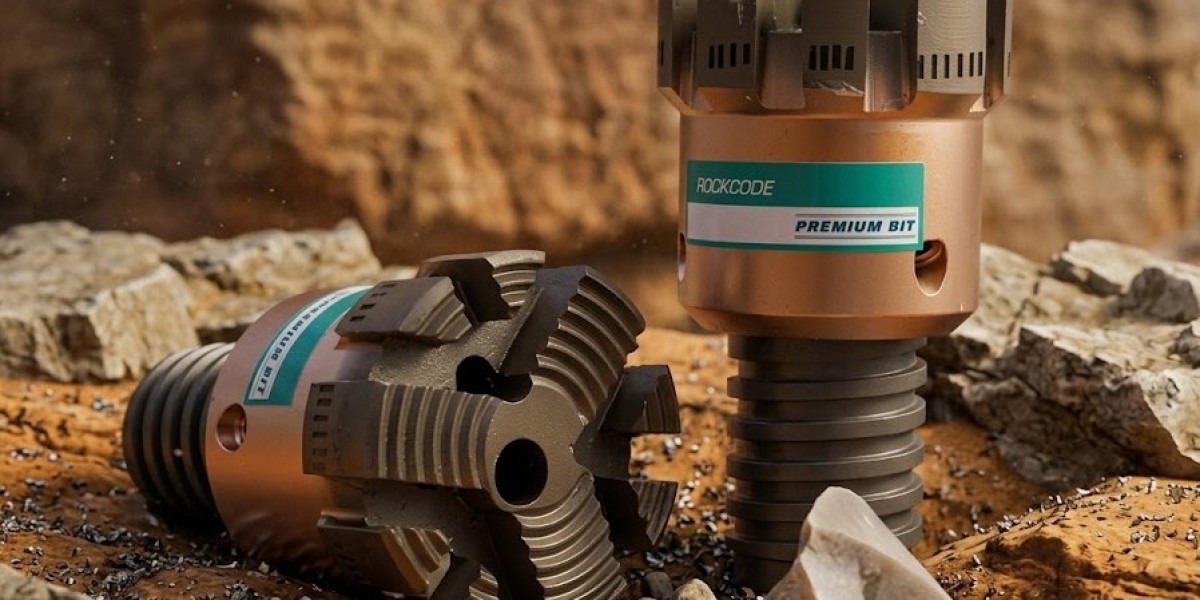

In mineral exploration, geotechnical investigation, water well construction, and geothermal drilling, choosing the appropriate drilling bit directly affects drilling speed, operating costs, and overall project efficiency. While core drilling remains indispensable when geological samples are required, many drilling applications prioritize penetration rate and productivity over core recovery. In these situations, non-coring bits have become the preferred solution.
Designed for efficient full-hole drilling, non-coring bits allow contractors to advance boreholes quickly while maintaining stable performance across a wide range of geological formations. Understanding their design, applications, and operating principles helps drilling professionals select the most suitable tool for each project.
What Are Non-Coring Bits?
Unlike diamond core bits that recover intact rock cores for geological analysis, non-coring bits are designed to break and crush rock into small cuttings that are removed by drilling fluid or compressed air.
Because no core barrel is required, drilling operations become simpler and faster, making non-coring bits particularly suitable for projects where geological sampling is not the primary objective.
Typical applications include:
- Overburden drilling
- Water well construction
- Geotechnical site investigation
- Geothermal drilling
- Pilot hole drilling
- Infrastructure and foundation projects
For contractors working in remote locations or under tight project schedules, faster penetration often translates directly into lower drilling costs.
Why Choose Non-Coring Drilling?
The decision between coring and non-coring drilling depends on project objectives.
Core drilling is selected when continuous geological samples are necessary for resource evaluation or laboratory analysis.
Non-coring drilling is preferred when the primary goals are:
- Rapid penetration
- Higher drilling efficiency
- Lower operating costs
- Borehole construction
- Ground stabilization
- Access to deeper formations
Experienced drilling engineers often combine both drilling methods within the same project, switching tools as geological or engineering requirements change.
Common Types of Non-Coring Bits
Modern non-coring bits are generally manufactured using two primary cutting technologies.
Tungsten Carbide Insert Bits
Tungsten carbide insert bits remain one of the most widely used solutions for percussion and rotary-percussion drilling.
The carbide buttons are securely fitted into a hardened steel body, providing excellent resistance to impact and abrasive wear.
These bits are particularly suitable for:
- Hard rock formations
- Abrasive ground conditions
- Percussion drilling
- Rotary-percussion applications
Their durability makes them a reliable choice for demanding drilling environments.
PDC Non-Coring Bits
Polycrystalline Diamond Compact (PDC) technology has become increasingly popular in rotary drilling applications.
Each PDC cutter consists of a synthetic diamond layer bonded to a tungsten carbide substrate under extremely high pressure and temperature.
Rather than crushing rock, PDC cutters shear the formation, improving drilling efficiency while reducing energy consumption.
Research presented at the Stanford Geothermal Workshop has shown that optimized PDC bits can significantly increase drilling penetration rates while lowering drilling costs compared with conventional roller cone bits in hard rock formations.
Continuous improvements in cutter geometry, diamond table design, and bonding technology have further enhanced PDC performance in challenging geological conditions.
Typical Applications for Non-Coring Bits
Selecting the proper bit depends on formation characteristics and drilling objectives.
Some of the most common applications include:
Overburden Drilling
Loose formations such as sand, gravel, clay, and weathered materials are often drilled using non-coring bits before reaching competent bedrock.
Pilot Hole Drilling
Pilot holes provide guidance for larger diameter drilling operations or site investigations where continuous core recovery is unnecessary.
Water Well Construction
Water well contractors frequently use non-coring bits to reach aquifers quickly while maintaining drilling efficiency.
Geothermal Drilling
Fast penetration through overlying formations allows drilling teams to reach geothermal zones more efficiently.
Across these applications, proper bit selection contributes to improved drilling speed, stable boreholes, and lower operating costs.
Engineering Better Drilling Performance with ROCKCODE
At ROCKCODE, we believe that a drilling bit should be viewed as a productivity tool rather than simply a consumable product.
Every non-coring bit is engineered to provide reliable performance under demanding drilling conditions.
Our design philosophy focuses on achieving the ideal balance between:
- Wear resistance
- Structural strength
- Cooling efficiency
- Cutting removal
- Long service life
By optimizing both material selection and bit geometry, ROCKCODE helps drilling contractors maximize operational efficiency throughout the drilling process.
Optimized Waterway Design Improves Efficiency
One of the most common causes of premature bit failure is insufficient removal of drilling cuttings.
If rock fragments remain at the cutting face, they are repeatedly crushed, generating excessive heat and accelerating bit wear.
To address this challenge, ROCKCODE engineers have optimized waterway designs that provide:
- Improved cooling
- Faster removal of rock cuttings
- Better drilling fluid circulation
- Reduced matrix erosion
- Stable drilling performance
Advanced CAD simulation is used during product development to verify fluid flow and structural strength before manufacturing.
This engineering approach helps maintain consistent penetration rates during deep-hole and high-torque drilling operations.
Factors That Influence Bit Performance
Even the highest-quality drilling bit performs best when matched with suitable drilling conditions.
Several important factors influence bit life and drilling efficiency.
Formation Characteristics
Rock hardness, abrasiveness, and fracture conditions determine which bit design provides the best overall performance.
Drilling Parameters
Proper control of rotational speed (RPM) and weight on bit (WOB) is essential.
Applying excessive drilling pressure can damage the cutting structure, while insufficient weight may reduce drilling efficiency.
Drilling Fluid Performance
Effective drilling fluid removes cuttings, cools the bit, and minimizes unnecessary wear.
Poor fluid circulation often leads to overheating and accelerated bit deterioration.
Material Quality
The durability of synthetic diamonds, carbide inserts, and metal matrix materials has a significant impact on service life and long-term drilling performance.
Why Professionals Choose ROCKCODE
ROCKCODE combines engineering expertise with advanced manufacturing technology to produce reliable drilling tools for global exploration projects.
Our non-coring bits offer:
- Precision-engineered cutting structures
- High-strength steel bodies
- Optimized waterway systems
- Excellent wear resistance
- Stable penetration performance
- Reliable operation in demanding geological conditions
Whether drilling through hard crystalline rock or complex sedimentary formations, ROCKCODE products are designed to help contractors improve productivity while reducing overall drilling costs.
Final Thoughts
Non-coring bits remain one of the most efficient drilling solutions for projects where speed, stability, and cost-effectiveness are more important than core recovery.
By understanding formation conditions, selecting the appropriate bit design, and applying proper drilling parameters, contractors can significantly improve drilling efficiency while extending tool life.
With continuous investment in engineering innovation, material technology, and product development, ROCKCODE continues to provide high-performance non-coring bits that support mineral exploration, geotechnical investigation, geothermal drilling, and water well construction projects around the world.
For drilling professionals seeking dependable performance and lower cost per meter, choosing the right non-coring bit is an investment in long-term operational success.
https://www.rockcodebit.com/a-technical-guide-to-non-coring-bits-in-geological-exploration.html