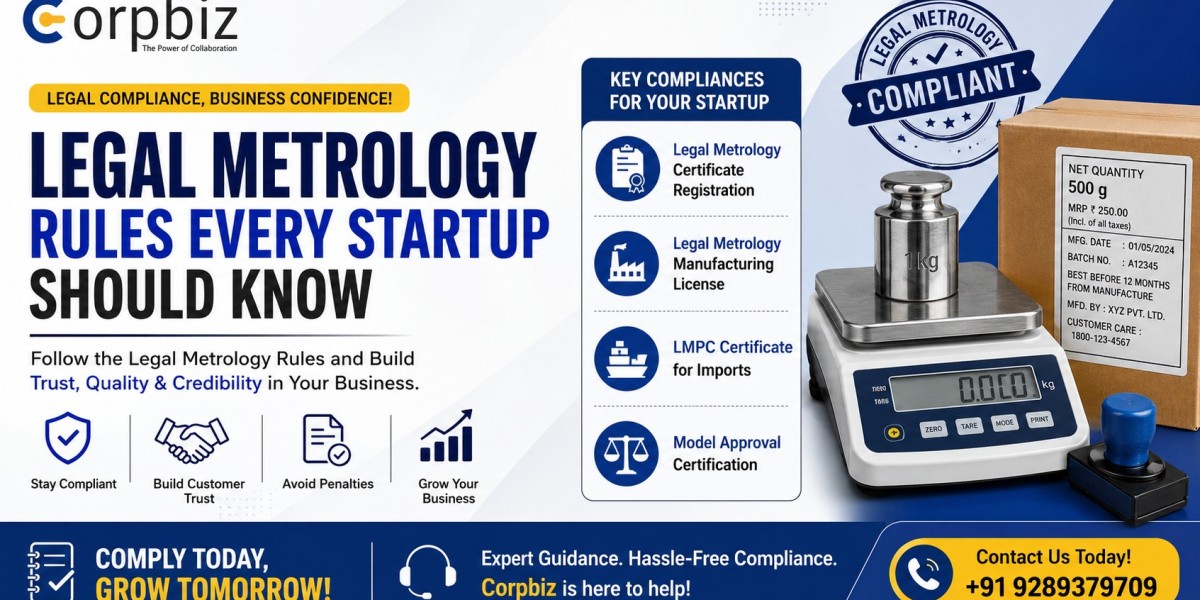

Starting a new business is exciting, but following government rules is equally important. Many startups focus on product development, marketing, and sales but forget about legal compliance. One such important law is the Legal Metrology Act, 2009 and the Legal Metrology Rules.
If your startup manufactures, imports, packs, or sells products by weight, measure, or number, you may need to follow Legal Metrology regulations. Ignoring these rules can lead to penalties, product seizure, or legal action.
In this blog, we will explain the important Legal Metrology rules every startup should know in simple words.
What is Legal Metrology?
Legal Metrology is the system of laws that ensures weights and measures used in trade are accurate and fair. It protects both consumers and businesses by ensuring that products are sold with the correct quantity and proper labeling.
Whether you sell food items, cosmetics, medicines, electronics, or household products, Legal Metrology rules may apply to your business.
Why is Legal Metrology Important for Startups?
Following Legal Metrology laws helps startups:
Build customer trust
Avoid legal penalties
Ensure accurate product labeling
Improve brand reputation
Sell products smoothly across India
Meet regulatory requirements for online and offline sales
Compliance also helps businesses expand into larger retail chains and e-commerce marketplaces.
Who Needs Legal Metrology Compliance?
A startup may need Legal Metrology approval if it is involved in:
Manufacturing packaged goods
Importing products into India
Packing or repacking products
Selling products by weight or measurement
Manufacturing weighing or measuring instruments
Using weighing machines for commercial purposes
Important Legal Metrology Rules Every Startup Should Know
1. Obtain Legal Metrology Certificate Registration
Businesses involved in manufacturing, packing, importing, or selling packaged commodities often require a Legal Metrology Certificate Registration.
This registration confirms that the business follows the Legal Metrology Act and applicable rules.
Without proper registration, authorities may impose penalties or stop product sales.
2. Get a Legal Metrology Manufacturing License
If your startup manufactures weighing machines, measuring instruments, or similar equipment, obtaining a Legal Metrology Manufacturing License is mandatory.
The license allows manufacturers to legally produce and sell measuring equipment in India.
The application generally requires:
Business registration documents
Factory details
Machinery information
Technical staff details
Identity and address proof
3. Importers Need LMPC Certificate
If your startup imports packaged products into India, you may need an LMPC Certificate for Imports.
LMPC stands for Legal Metrology Packaged Commodities.
The certificate is required before imported goods are sold in the Indian market.
Products without proper LMPC compliance may face customs clearance issues or regulatory action.
4. Understand Model Approval Certification
Businesses manufacturing weighing or measuring instruments must obtain Model Approval Certification before selling their products.
The government tests the equipment to ensure it meets prescribed standards.
Only approved models can be manufactured and sold commercially.
5. Follow Packaging and Labeling Rules
Every packaged product should clearly display:
Product name
Net quantity
Maximum Retail Price (MRP)
Manufacturer's name and address
Importer's details (if applicable)
Date of manufacture or packing
Customer care details
Incorrect labeling can result in penalties.
6. Use Standard Weights and Measures
Businesses should always use approved and verified weighing and measuring instruments.
Using incorrect equipment may lead to:
Customer complaints
Legal notices
Business penalties
Product rejection
7. Timely Renewal of Licenses
Many Legal Metrology licenses require periodic renewal.
Missing the renewal deadline may result in:
Late fees
Suspension of license
Fresh application requirements
Keep track of renewal dates to avoid interruptions.
8. Keep Business Records Updated
Maintain proper records of:
Licenses
Registrations
Inspection reports
Calibration certificates
Purchase invoices
Sales records
These documents help during government inspections.
9. Cooperate During Inspections
Legal Metrology officers may inspect your business premises.
Ensure that:
Records are available
Labels are accurate
Measuring instruments are verified
Licenses are valid
Cooperation helps avoid unnecessary issues.
10. Stay Updated with Legal Changes
Government rules may change from time to time.
Businesses should regularly review updates related to:
Packaging rules
Import regulations
Product declarations
License procedures
Professional compliance support can help businesses stay updated.
Common Mistakes Startups Should Avoid
Many startups make simple mistakes such as:
Selling products without registration
Incorrect product labels
Using unverified weighing machines
Importing products without LMPC certification
Delaying license renewals
Ignoring Model Approval requirements
Avoiding these mistakes can save time, money, and legal trouble.
Documents Commonly Required
Although requirements vary, businesses generally need:
PAN Card
Aadhaar Card
Business Registration Certificate
GST Registration
Address Proof
Factory License (if applicable)
Import Export Code (for importers)
Product details
Identity proof of authorized person
Benefits of Legal Metrology Compliance
Following Legal Metrology rules offers several benefits:
Better customer confidence
Smooth business operations
Reduced legal risks
Easier product approvals
Improved market credibility
Better opportunities with retailers and e-commerce platforms
How Corpbiz Can Help
Corpbiz provides complete assistance for Legal Metrology compliance across India. Our experts help businesses obtain:
Legal Metrology Certificate Registration
Legal Metrology Manufacturing License
LMPC Certificate for Imports
Model Approval Certification
Documentation support
Application filing
Compliance guidance
Renewal assistance
Our experienced professionals make the entire registration process simple, quick, and hassle-free for startups and established businesses.
Conclusion
Legal Metrology compliance is an important part of running a successful startup in India. Whether you manufacture products, import packaged goods, or produce measuring instruments, following Legal Metrology rules helps you avoid penalties and build customer trust.
Obtaining the required registrations, licenses, and certifications at the right time ensures smooth business operations and long-term growth. If you are unsure about the compliance requirements, professional guidance can make the process much easier.
Frequently Asked Questions (FAQs)
1. What is Legal Metrology Certificate Registration?
It is a registration required for certain businesses dealing with packaged commodities, weights, and measures to comply with Legal Metrology laws.
2. Who needs a Legal Metrology Manufacturing License?
Businesses manufacturing weighing or measuring instruments generally require this license before starting production.
3. What is the LMPC Certificate for Imports?
The LMPC Certificate for Imports is required for importers bringing pre-packaged goods into India for sale.
4. What is Model Approval Certification?
Model Approval Certification confirms that a weighing or measuring instrument meets government standards before commercial production and sale.
5. Is Legal Metrology mandatory for startups?
Yes. If a startup manufactures, imports, packs, or sells products covered under the Legal Metrology Act, compliance is mandatory.
6. What happens if a business violates Legal Metrology rules?
Authorities may impose fines, seize products, suspend licenses, or initiate legal proceedings depending on the violation.
7. How long does the Legal Metrology registration process take?
The timeline depends on the type of registration, documents submitted, and the concerned state authority.
8. Can Corpbiz help with Legal Metrology compliance?
Yes. Corpbiz offers end-to-end support for Legal Metrology registrations, licenses, LMPC certification, Model Approval Certification, renewals, and compliance services.
Author Profile
Author: Atul Shukla
Regulatory Content Specialist
Atul Shukla is an experienced Regulatory content writer with over 10 years of experience creating informative content on Legal Metrology, BIS, CDSCO, FSSAI, GST, company registration, and other business compliance topics. He focuses on simplifying complex legal concepts into easy-to-understand content that helps startups, entrepreneurs, and businesses make informed compliance decisions.